"No one, least of all the writer, imagined that in 1914 the temple of Janus…was to be thrown open more widely than before; and what the future has in store for us…is indeed a secret, the disclosure of which the bravest cannot look forward to without anxiety." (F E Nugee, vicar of St Martin's, Leicester, January 1915)
John Frederick Johnson was the only child of James Johnson (1849-1927) and Annie Elizabeth Flude (1856-1947) who married at St Matthew’s church in 1887. He was born on 28th September 1889 and baptised at St Matthew’s shortly after on 6th November. After their marriage James and Annie moved into 5 Upper King Street, where John was born and where they would remain for the next forty years. James worked for himself as an accountant in shared premises at 24 Millstone Lane.
5 Upper King StreetWyggeston Boys’ School
John attended Wyggeston School, was later a student at St John’s College, Oxford (1911) and became a cadet in the Oxford University Officers Training Corps. He took Honours in Greats and a degree in Divinity. He joined the 1/4th Battalion Leicestershire Regiment as a second lieutenant on 19th October 1914. John departed Southampton on the 2nd and arrived at Le Havre on 3rd March 1915. On arrival at No 6 Rest Camp, Le Havre, he was detailed to lead the Wagon Sanding Party. On 12th March he worked with fellow St Martin’s man Second Lieutenant Frederick Maxwell Waite as “Sub of the Day” prior to the journey to billets at La Bizet. They often worked together, until Frederick was killed in July. John was promoted Lieutenant on 8th September 1915.
The 1/4th Battalion fought at the Battle of Loos, including the attack on the Hohenzollern Redoubt on 13th October 1915 described by the regiment as “one of the most brilliant exploits of the war.” However, all the officers of the battalion were either wounded or killed. John was seriously wounded. The Wyggestonian magazine recorded that five Old Wyggestonians were wounded at Hohenzollern, including John, and eight had been killed. John joined their number soon after, dying in hospital on 30th October 1915. He was buried at Lillers communal cemetery, in France. He left £85 6s 5d which was sent to his father on 12th March 1917. John had left no will, so letters of administration were obtained to enable his father James to inherit his personal estate of £409 6s 8d.
James continued working as an accountant at 24 Millstone Lane throughout the war. Although he did not live in the parish of St Martin’s, he had been baptised in the church in 1849 and worked in the parish for many years, and was probably well known. So when the call went out for names of men of the parish who had fallen, James and Annie obviously felt that St Martin’s Church was where they would like their son remembered, and this was agreed by the deciding committee. James worked on in Millstone Lane until around 1923 when he probably retired in ill health. During the late 1920s he worked on a catalogue of Leicester Abbey. He died in Bournemouth in 1927, still living at 5 Upper King Street. Annie lived on for another twenty years, dying in March 1947 in Derbyshire (where she had been born). They are both buried at Welford Rd Cemetery.
Robert Dyer Kirby (1869 -1954) and Jane Hubbard (1865-1956) married at St Martin’s on 29th June 1895. Before marriage Jane lived at 21 Town Hall Lane and though the family subsequently lived and worked in Highfields – where Robert had lived before marriage – the connection with St Martin’s remained for the rest of their lives. Robert was sidesman at St Martin’s from 1909 until 1933 and served on the PCC during the 1920s. Robert and Jane had three children, all sons: John Alfred (1896-1918); Harry Bernard (1898-1991) and Robert Aubrey (1900-1976).
John Alfred Kirby was born at 6 Clipstone Street, Highfields (since demolished) in 1896 and baptised at St Martin’s at 18th April 1897. The following year the family moved to 14 Diseworth Street. Brother Harry Bernard was baptised at St Martin’s on 10th September 1898. Robert Aubrey Kirby was born in September 1900. Sometime between 1901 and 1911 the family moved to 14 Fairfield Street, remaining there until 1928. Father Robert worked as a carpenter and joiner. Just before 1914 he set up business at 2 ½ Glebe Street, very close to home. John probably attended Melbourne Road School like his brother Harry, and perhaps attended Wyggeston Boys’ School.
John Alfred Kirby enlisted in the Leicestershire Regiment 21st January 1916 at the Town Hall recruiting office aged 19, when he was a clerk. He was 5’6” and weighed 117lbs. He was posted to the 3rd battalion on 25th March 1916, promoted to corporal on 30th April 1917, then posted to the 15th Royal Scots (known as ‘Cranston’s Battalion’) on 5th July 1917.
During the beginning of the Second Battle of the Somme the 15th Royal Scots were in the front trenches, under constant bombardment with shells and gas, and took up positions near the villages of Croisilles and then Boyelles. The battalion fought under atrocious conditions for two days. On the second morning, 22nd March 1918, there was little actual fighting but around lunchtime “some hundreds of Germans with a profusion of machine guns appeared…..all day groups of German machine-gunners could be seen rushing forward.” It is likely that John Alfred Kirby met his death at this time. He was pronounced missing presumed dead.
John’s father Robert carried out work on St Martin’s Church in 1918, 1919 and 1920, including opening the clerestory windows, repairing guttering on the chancel roof and securing the book boards in the nave and south aisle, for which he was paid £1 13s. In March 1918 he successfully applied for £50 – presumably a loan – to enable him to take on an apprentice, therefore enabling him “to overcome a financial anxiety.”
In 1920 Frederick Macnutt, vicar of St Martin’s, witnessed father Robert Kirby’s application to receive his son’s memorial scroll and plaque (these had to be applied for and the application countersigned by a minister or a magistrate). Once the package arrived it was left unopened by Robert and Jane for a long time. Robert apologised for the delay in acknowledging receipt, explaining that Jane was “not able to open it,” presumably because she was too upset.
John’s personal effects, consisting of two discs, were sent to his mother on 23rd May 1924. These must have been discovered during the period of grave searching and relocation which took place in the years following armistice. However no body was found. John is commemorated at Arras memorial, which commemorates around 35,000 servicemen who fell in the Arras sector between 1916 and 7th August 1918. The memorial was unveiled in 1932.
Harry Bernard Kirby was born on 1st September 1898 and baptised at St Martin’s fifteen days later. His birth was officially registered as Henry Bernard Kirby but he was always known and recorded as Harry thereafter. He attended first Melbourne Road Council School and then Wyggeston Boys’ School where he learned French and Latin and received physical training. After leaving Wyggeston’s Boys he worked as a student teacher and then as assistant teacher at Avenue Road Extension School in Clarendon Park, then an area populated by working class families where the fathers were carpenters, bricklayers and small shopkeepers. In 1916 he took exams in English, history, geography, mathematics and Latin – achieving first class honours.
Harry was probably conscripted later that year, and joined the army as a private in the 86th Training Reserve Battalion before subsequently joining the 13th Durham Light Infantry. In September 1917 the battalion fought in the battle of Menin Road Ridge, part of the Battle of Passchendaele – in just five days the British recorded over 20,000 casualties. In November 1917 they moved to Italy, following a combined Austro-Hungarian and German victory over the Italians at Caporetto in October. Trench warfare followed but the situation was very different to that on the Western Front and relatively few casualties were sustained. The 13th battalion withdrew from Italy in September 1918. Then followed work on repair, graves work, etc., until April 1919.
Upon returning to civilian life in 1919 Harry left Leicester to study for two years at St John’s College Battersea, a Church of England teacher training college where he was judged to have “a heavy and monstrous manner of speech.” He still obtained good work from his pupils during his first year teaching practise at Belleville Road School in Battersea, and was “fairly satisfactory” at Winstanley Road School in 1920.
Harry married Kathleen Simpson (1911-1994) in Leicester in 1939. They had a son, John, in 1940, a daughter – Valerie – in 1943 and second son, Martin, in 1946. During the 1950s the family lived at 97 Romway Road, moving to 140 Andrew Road, Anstey by 1966. In about 1970 they moved to Barrow on Soar, settling at 29 Welland Road, Barrow on Soar. Harry continued working as a teacher. In 1970 he acted as executor for the will of a former colleague George Watson Bates. Harry died in Barrow on Soar in February 1991.
George Edward Marfitt was born in Ardwick, Manchester, on 12th December 1873 to parents Thomas Edward Marfitt (1848-1921) and Eliza Hanson (1852-1940), who married by license at St Margaret’s Church in March that year. George was to be their only child. Thomas Edward was a maker-up and packer, in partnership with J Morton in Manchester until the liquidation of the business in August 1874. They remained in Manchester, living at various addresses, until at least 1880. However, George was baptised St Martin’s, Lincoln on 3rd April 1874. This was Eliza’s home parish, although she had left Lincolnshire as a young girl to work as a domestic servant, including working in London.
Wyggeston Boys’ School
George attended Wyggeston boys’ school from 1st April 1886 until the winter of 1889 when, whilst in the upper sixth form, he completed his exams (and was awarded a prize for scripture). George and his mother Eliza seem to have lived alone without Thomas during these years. In 1891 Eliza described herself to the census enumerator as a widow. Eliza and George lived with Eliza’s adopted mother Ann Bell, who was the owner of a servants’ register officer (akin to an employment agency today). Eliza was the manageress of the business, which operated from Churchgate. They lived round the corner at 14 New Bond Street. Thomas joined Eliza by 1901 – he was a member of the PCC of St Martin’s and a sidesman from at least 1909 until 1921. Eliza was one of the ladies responsible for the flowers. They attended St Martin’s from at least 1899.
After George finished school he began an apprenticeship with chemist George John Blennerhassett Woolley (1847-1932). This ended in 1895 when he qualified as a chemist, having spent a term studying at South London School of Pharmacy, affectionately known by its students as Muter’s College as it was led by Dr Muter at 325 Kennington Road. He spent some time working as a chemist in Bournemouth before marrying Married Mary Ann Poundall Pearson (1875-1943) at St Martin’s on 3rd June 1895. Mary lived at 25 New Bond Street so it is likely that they had known each other for a long time.
By 1898, when George and Mary’s first child Ronald George (1898-1898) was born, George was the manager of his former master Mr Woolley’s chemist’s shop in Oxford Street, living with him in Carlton Street. That year Mr Woolley was fined £2 for using deficient weights, which he and George claimed was due to washing the weights in oxalic acid, eroding them. Sadly baby Ronald died aged 5 months in November and was buried at Welford Road Cemetery. Mary gave birth to their second child, Kathleen Thelma Mary (1903- 1952), in 1903 whilst they lived at Rose Hill Villa, Duncan Road. In 1906 they moved to 10 Filbert Street.
In 1900 George purchased G J B Woolley’s chemist business at 29 Carlton Street and 116 Oxford Street. The former was one of the oldest pharmacies then in Leicester, being established before 1850 by Oliver Burden, before it was taken over by Woolley. In his spare time George was a member of the YMCA and a keen sportsman, enjoying swimming, football, cricket, golf, fishing and shooting. He was also a keen freemason, belonging to Galen Lodge as well as the Harford Lodge of Leicester. As a member of the Leicester Chemists’ Association he took part in many cricket matches, for example in 1905 the Leicester and Leicestershire Chemists played against the Leicester Doctors (rained stopped play). By 1906 he was joint honorary secretary of the association.
54 Regent Road
George grew in success during the early twentieth century. In 1906 moved the Carlton Street business to 2 Infirmary Square and a few years later in 1910 purchased a business at 2 Hartington Street from Mr Furnival. From 1909 George, Mary and Kathleen lived at Lyndhurst, Birstall Hill, where they kept a servant. In 1916 they moved to 54 Regent Road, where they lived until George died.
When war broke out George had chemist shops at Infirmary Road, 46 Green Lane Road & Hartington Road. Although no records of his service survive whatsoever, except notices in the London Gazette, we know that on 4th October 1917 was appointed second lieutenant in the Leicestershire Volunteer Regiment 2/1st Battalion. This is not surprising, even though George was by this time aged 44, as he was described as “a keen volunteer” in the early 1900s. He relinquished his commission on 11th October 1919, retaining the honorary rank of second lieutenant. By this time he was serving the 4th Volunteer Battalion Leicestershires.
However, during the war George still remained relatively active in trade – in May 1918 he gave a talk on window dressing to The Progressive Pharmacy Association. In fact, George was by now pretty famous in chemist and general trade circles, 1926 The Chemist and Druggist described him “as a window dresser…In a single year he has won prizes for his windows amounting to no less than £750. His talents in this direction have received a wide acknowledgment ; for example, in ” Window Dressing for Chemists,” by E. Barman (editor of ” Display “), the work of Mr Marfitt is described and profusely illustrated.” One such example was the Drapery Trades Exhibition of May 1919, where George took first prize (a silver cup and gold medal) for a window display of phosphorus-and-quinine tonic. George was also an active member of the National Chamber of Commerce.
Life wasn’t always easy. In 1921 George’s mother Eliza was seriously assaulted near her office, by a man and woman who pretended to be looking for work. They attempted to rob Eliza but her screams made the assailants run away. They were caught and the man was sentenced to 12 months hard labour. George’s father Thomas died the same year (but not Eliza, who outlived her son, dying in 1940). In March 1926 George was summoned for having taken ” an order for spirits in a quantity less than two gallons for retailing without an Excise licence entitling him to do so.” The chairman of the Bench said it was obvious that George had acted in ignorance ; nevertheless, ignorance was not a good defence in law. A fine of £20, with £5 costs, was imposed. This must have been embarrassing to a prominent tradesman such as George.
George died at home aged 54 on 9th June 1928, leaving £6250 to his wife Mary. He was buried at Gilroes Cemetery alongside his father. George’s mother outlived him by twelve year. Wife Mary lived on until 1943, when she too was buried in the Marfitt family grave.
Frederick William Martin was born at 44 Hinckley Road in December 1893, the youngest son of the son of John Charles Bowmar Martin (1853-1931) and Hannah Shardlow (1852-1936). He was baptised at St Paul’s on 18th January 1894. John was a machinist in 1894, head foreman at a shoe factory in 1901 and a coal agent at a retail coal office in 1911. Frederick had two brothers – Arthur Edward (1885-1961) and Albert Claude (1891-1972) and two sisters Ada Hannah (1879-1960) and Mabel Fanny (1895-1921). The family lived at 108 Nedham Street in 1901 and in 1910 they moved to 51 Stretton Road.
After leaving school Frederick worked as a clerk in an insurance office. He attested into the 1st Kings Own Scottish Borderers, then joined the 10th Entrenching Battalion (a temporary unit from which drafts of replacements could be drawn by conventional infantry battalions) and finally the 15th (Service) Battalion (1st Glasgow), Highland Light Infantry – often known by its original title of the Glasgow Tramways Battalion. This battalion was in action on the Somme in 1917 and 1918. Frederick was killed in action on 3rd April 1918 in Pas de Calais and is buried at Bienvillers Military Cemetery, which was close to the front line.
At his death Frederick had personal effects of £13 15s 7d held with the regiment, sent to his brothers Arthur and Albert – also later a war gratuity of £6 to them. Neither seems to have fought in the war and both remained in Leicester for the remainder of their lives. Frederick had also written a will in August 1917, giving his address as 40 Gaul Street which was where his parents then lived. He made a number of bequests: His silver watch, silver cigarette case, Gladstone bag and silver match box case were left to nephews. Frederick’s bible and “the remainder of my earthly possessions” were left to his mother. His gold ‘Albert’ watch was bequeathed to Mabel Hercock (1894-1982) who may have been his sweetheart. Mabel was a dressmaker and the daughter of a coal merchant’s carter, which is perhaps how they knew each other.
Parents John and Hannah lived on at 6 Gaul Street, moving along the road to number 36 by 1931 when John Charles died. Hannah died in 1936 living at 9 Clarefield Road. Both are buried at Welford Road Cemetery.
Henry Mason (1864-1943) was born in Ashby Parva in 1863 to parents George (c1820-1909) and Elizabeth Simon (c1827-1911), who kept a prosperous farm of about 150 acres which adjoined the Midland Railway line. They married by special license at Brighton in 1855. He had three older brothers John (1857-), George (1859-), Edward (1860-). He was baptised, like his brothers, at the parish church of Ashby Parva on 10th May 1863. Henry’s father was a constable and seems to have been a kindly man, purchasing and distributing coal to the poor families of the parish. In 1872 the family moved to a larger farm of 400 acres at Four Elms Lodge, Ullesthorpe.
Henry’s brothers followed their father into farming, but by 1881 Henry was a student of medicine at Glasgow. He qualified as a doctor in 1884 at Glasgow and by 1887 had established a medical practice at 68 Rutland Street. It was successful enough to enable Henry to marry Cecilia Florence Norman (1867-1962) at St Wulfrun, Grantham, on 24th April 1891. Henry and Cecilia had three children, Henry Kingsley “Kingsley” (1893-1972), Alan Edward Glendenning (1896-1916) and Philip de Roos (1899-1948). By May the 1893 family lived at 73 Welford Road and by 1896 at 52 London Road. In 1901 Henry and Cecilia settled 66 London Road, where they remained until 1930.
In 1916 Henry served as a Captain in the Royal Army Medical Corps, possibly working at the 5th Northern General Hospital. After the war he continued working at 66 London Road, moving to live at Birstall Spinney between 1931 and 1943. He died at Leicester Royal Infirmary while living with his son Philip, who was also a doctor, at 376 London Road on 17th April 1943.
Alan Glendenning Mason was born in 1896 and baptised at St Martin’s on 23rd July 1896. He attended Wyggeston Boys School, where he excelled at athletics. At his school sports day in June 1912 he won silver cups for coming first in the 120 yards hurdle race and the high jump and a silver tankard for coming second in the 100 yards sprint. This crowned him joint school sports champion. In June 1914 Alan captained the school cricket team against Derby School, who won by a single run. He passed his Oxford Local Examination with the highest honours and was awarded at Magdalen College, Oxford, intending to follow his father into medicine.
However, Alan did not take up his place. He had barely left school when he joined the Leicestershire regiment on the outbreak of war. The Wggestonian magazine recorded “We are particularly pleased to see that AEG Mason has obtained a commission in the 10th Leicesters. He has gone up to Oxford to train for a few weeks with the OTC before taking up his new position. We wish him all success, and are confident that he will bring honour to the School.” He accepted a commission as Temporary Second Lieutenant in the 7th Battalion Leicestershire Regiment on 22nd January 1915. He left Ludgershall for Folkestone at 5pm on 29th July 1915 with the rest of his battalion and landed at Boulogne at about midnight. The battalion slept in tents nearby for the remainder of the night before moving off to Pont a Bric. The next few days were spent acclimatising and being instructed in trench warfare. By Christmas 1915 Alan was serving in the trenches. The war diarist recorded on Christmas Day: “The battalion relieved by 9th battalion in usual way. Very wet. A quiet day.” He also recorded some of the harsh reality of trench life – for example on 6th Feb 1916 “In the evening while patrolling the wire an NCO of Group II was mortally wounded. His cries caused a considerable amount of fire to be opened from the trenches about 100 yds away. Still several men and officers went out to his assistance and a gap was cut in the wire and he was brought in on a stretcher. He died the following day.”
The surviving war diary ends on 26th June 1916 shortly before Alan died. In the previous few days the battalion were at Baillemont. Several junior officers were wounded and invalided to England but Alan was not among them. Alan died of wounds on 30th June 1916 and was buried at Doullens Cemetery Extension No 1.
The Leicester Mercury reported on 3rd July 1916
LEICESTER OFFICER DIES OF WOUNDS
SECOND LIEUTENANT ALAN MASON
We deeply regret to learn that Dr Mason, of London-road Leicester, has received official intimation of the death, from wounds, in France, on Friday last, of his second son, Second Lieutenant Alan E G Mason. The deceased was educated at the Wyggeston School and it is a tragic circumstance that on the day of his death, at the annual school sports, his younger brother, F de R Mason, completed a triumvirate of distinction in athletics by winning all six events, all three sons of Dr Mason having thus in turn become Victor Ludorum. The deceased officer, who completed his 20th year this spring, was, in fact, Victor Lodorum two years in succession, and was among the most popular School Captains that Wyggeston School has ever had. More than this, he had won distinction in is studies, passing all three grades at the Oxford Local Examination, the Senior in the first class, and just before the war he had won an Open Science Demyship Scholarship at Magdalen College, Oxford.
Destined for his father’s profession, there seemed to be before him a brilliant career but, like many other young fellows, on the outbreak of hostilities, he threw aside his prospects and joined up as a “ranker” in the Leicester Territorials. In February of last year he was given a commission in one of the additional battalions of the Leicestershire Regiment, and in due course went out to France. The current issue of The Wyggestonian contains a cheery letter which he wrote a short while ago to the headmaster.
The greatest sympathy will go out in their sad bereavement to Dr and Mrs Mason. Their eldest son H Kingsley Mason, is also in the Imperial Forces, having joined the City of Regina Battalion, Canadian Expeditionary Force.
A memorial notice was also placed in the Leicester Mercury on 29th June 1918: “MASON – In loving memory of Alan E G Mason, 2nd Lieut., of Leicestershire Regt., who died of wounds in France, June 30th, 1916.”
The letter referred to in the article had been sent by Alan to his former headmaster on 16th March 1916. It read:
“We are all hoping we have seen the last of the cold weather for this year, at any rate, it is now beautifully warm spring weather. Indeed trench life is quite pleasant just at present, and I can imagine many situations worse than sitting in warm sun watching our artillery attending to the Boches, with an occasional air encounter thrown in as diversion. Air fights, however, are very disappointing; you see the opposing planes circling round each other, you hear the distant rattle of their machine guns, but it is only very rarely that anything sensational follows the fight. They generally fly round each other till they get tired of it; they then steer off by mutual consent.
I should have been home on leave by now, but unfortunately leave has been stopped indefinitely. The struggle at Verdun is the rumoured reason, but the Army is the most wonderful institution for producing rumours that I have come across.”
Henry Kingsley Mason was born on 7th March 1893 and baptised St Martin’s on 11th May 1893. He attended Wyggeston Boys School where, like his younger brother, he excelled at sports and was crowned school champion. By adulthood Henry had very dark brown hair and blue eyes and was 5’10” tall.
After leaving school Henry worked as a bank clerk. On 22nd November 1912 he arrived at Quebec, Canada, intending to settle. He returned to England for a short time and then on 27th February 1913 he left Liverpool aboard the White Star “Cymric” bound for Halifax, Canada. He was intending to set up as a farmer. He lived at Francis, Sask at the outbreak of war.
On 8th March 1916, the day after his twenty third birthday, Kingsley enlisted at Regina, Sask, Canada. He joined the 32nd Battalion, Canadian Expeditionary Force as a private soldier, which was absorbed into the 15th Battalion the following January. Henry wrote a standard soldier’s will in September 1916, leaving his real estate to his father and all personal possessions to his mother. The significance of writing a will aged 23 cannot have been lost to Henry as his younger brother had died fighting just eight weeks previously. Perhaps the will was prompted by the “serious bout of pneumonia” reported by The Wyggestonian magazine, from which he recovered.
In November 1916 Henry returned to his native England, sailing from Halifax to Liverpool on the “Empress of Britain”. He spent time training at Bramshott, Crowborough and Seaford, where he transferred to the 1st Canadian Motor Machine Gun Brigade. He arrived in France for service in the field on 3rd September 1917, returning on 31st May 1918 to take up a temporary commission in the Royal Air Force. By this time Henry had risen in rank to Acting Sergeant in the 195th (City of Regina) Battalion. He had also increased his chest measurement two inches, if his service record is to be believed. Henry was appointed Flight Cadet on 16th November 1918. Henry seems to have been uninjured whilst on active service. His only hospital visit between 1916 and the end of the war was a two week stay at Camp Hughes, Winnipeg, suffering from tonsillitis.
On 5th October 1919 Henry married Elfrida Kathleen Bull (1895-1920) at St Matthew’s Anglican Church, Quebec. Henry’s address was Moose Jaw, Sask. Elfrida was born in Kettering , where she still lived in 1911 with her widowed mother. She travelled from Liverpool to Montreal, arriving on 5th October 1919 – Kingsley and Elfrida were married the very same day. By now Henry had returned to work as a bank clerk. Elfrida died just a short time after in 1920, perhaps in childbirth or possibly from Spanish ‘Flu, which was still active in Canada until the mid-1920s. She was buried at Moose Jaw City Cemetery.
At some point after Elfrida’s death Henry returned to England and lived with his parents at Bistall Spinney. He married Hilda Frances Hobson (1899-1983) at St Stephen’s, Norbury, on 28th February 1925. They settled in Derbyshire, where Hilda gave birth to a daughter, Ann (1930-), in 1930. From at least 1943 until Henry died they lived at 7 Darley Park Rd, Darley Abbey. Henry died in 1972 and Hilda in 1983.
Amos Mills (1869-1955) and Annie Elizabeth Daniels (1862-1950) married in Hull, where Annie was born, in 1894. They had two children, George Emery (1895-1915) who was born in the parish of St George, Hull in 1895 and Marjorie (1899-), who was born in Leicester and baptised at St Martin’s on 18th March 1899. In 1898-1899 they all lived at 7 Hazel Street, Amos working as a travelling sales representative. In 1901 the family – including Annie’s widowed mother – lived at 95 Narborough Road. In 1904 they lived at 111 Fosse Road South and Amos was a district manager for James Hole and Co, brewers. In 1905 they all moved to 10 Daneshill Road where Annie and Amos would live for the rest of their lives. There was a strong link with St Martin’s – Amos served as a songman in the choir between 1899 and 1928, and as sidesman for a further four years.
10 Daneshill Road
George was still at school at Wyggeston Boys’ School aged 16, which prepared him for his work by 1914 as a clerk at the London City & Midland Bank. He joined the 1/4th Leicestershire Regiment on 1st September 1914 at Leicester and was swiftly promoted to Lance Corporal and then Corporal on 31st October 1914. In January 1915 he was appointed Lance Sergeant. George landed in France very early on 25th June 1915, one of a draft of 91 men who joined the Battalion at a field camp which was being drenched by a heavy thunderstorm. He arrived at 1.30pm at Poperinghe, Flanders and paraded the next morning with the rest of the new draft. At 7pm the Battalion relieved the 5th Notts and Derbyshires at Sanctuary Wood. And so followed four months of ordinary life in the trenches: Training, marching, digging and lookout – often under fire.
On 10th October 1915 Church of England divine service followed by Holy Communion was held at 12 noon, immediately following two hours’ training. The Battalion had spent part of the previous day “practising attack.” The War Diary records that on 12th October 1915 the Battalion marched five miles at 9am from Hesdigneul to Sailly-Labourse where they had some hot food. They marched a further 2.5 miles on to Vermelles at 5.15pm and arrived at the trenches by 11pm. At noon the following morning the British Artillery began its bombardment. An hour later smoke and gas were deployed, for almost an hour. At 2pm the Battalion assaulted the Hohenzollern Redoubt. By the end of that day “all the officers of the Battalion were either killed or wounded.” They were relieved on 14th October and went back to Lancaster Trench, where a roll call was held. 188 officers and men returned. The strength on 14th June had been 15 officers and 621 other ranks. This was the most significant battle in which the 1/4th Leicestershires were involved and it was the battle in which George died. He was pronounced missing on 13th October 1915, and this was later revised to killed in action when his body, or part of it, was found by 1st Scots Guards some time later. However the body not recovered for reburial after armistice, so George is commemorated on the Loos Memorial to over 20,000 men and officers who have no known grave and who died in the area.
George’s effects were sent to his father on 21st February 1916, consisting of four pounds and seven shillings saved from his army pay. In 1917 his mother helped with the St Martin’s stall at the Mayor’s Bazaar which raised money for the war effort. George’s parents placed a memorial notice to him in the Leicester Mercury on 4th December 1917 which read “MILLS – In loving memory of George E Mills, only son of Mr & Mrs Mills, 10, Danes Hill-road, killed in the attack on Hohenzollern Redoubt, Oct. 13th, 1915 aged 20 years.” His picture also appeared in the Roll of Honour.
In May 1919 Mr Mills asked Canon Nugee, who had been vicar of St Martin’s during the war years but who by now had semi-retired to Shangton Rectory, to witness his application for George’s memorial scroll. This was received by Amos and Annie in December. Almost two years later they received his medals, which Amos acknowledged on 17th October 1921. Amos remained with James Hole and Co until his retirement in 1935. Annie died in 1950 and Amos in 1955 still living at 10 Daneshill Road.
Francis John Nugee at Radley School (from the Radley School archive)
Francis John Nugee was born on 31st May 1891 and baptised by his father at Sneinton on 24th June. He attended St Peter’s College Radley, where he was the only boy in the history of the college to be Head of the School (senior prefect) for two years. He enjoyed playing cricket and football. He went up to Magdalen College, Oxford, in 1910 and was a Cadet Lance Sergeant of the OTC. War broke out soon after Francis completed his finals in June 1914 and he responded by joining the 1/4th Leicestershire Regiment as second lieutenant on 5th October 1914. The battalion was stationed at Bishop’s Stortford in November 1914, training and preparing for the Front. During this time of waiting Francis was promoted lieutenant on 14th April 1915.
On 21st July 1915 Francis landed in France, joining the rest of his battalion in the trenches at Zillebeke Lake two days later, when he was posted to B Company. That very evening the Germans detonated a nearby mine, causing an enormous explosion that injured 9 men and formed a crater 40 feet wide. The battalion war diary records that less than a fortnight later, at 3.30pm on 5th August 1915, Francis was wounded in both shoulders by shrapnel from a “whizz-bang.” He was treated at Le Treport, near Dieppe. The St Martin’s monthly parish magazine records that Francis’s parents travelled to Dieppe to visit their son in hospital. Francis recovered and was able to return to the Front. He was promoted temporary Captain on 3rd March 1916, leading C company.
During 1916 Francis wrote a series of articles for St Martin’s magazine, entitled “Billet Life in France.” He eventually stopped on the advice of the censors.
On 27th February 1917 he led C Company of the 1/4th Leicestershires at the Battle of Gommecourt. Fellow St Martin’s man Sam Pilkington led D Company. The war diary describes how they “advanced from our front line by platoons and occupied a line of trenches in Gommecourt…without a casualty…at 8am C & D Co[mpanie]s again advanced 500 yards and occupied bombing posts…All ranks behaved very well during these operations and the Commanding Officer received the congratulations of the Divisional Commander for the work of the battalion.” Francis was confirmed as Captain on 16th June 1917. He was also appointed the battalion Sports Officer on 28th September 1917. On 1st January 1918 Francis was awarded the Military Cross in the New Year’s honours list for an act or acts of exemplary gallantry during active operations against the enemy.” Also in January 1918 Francis was promoted Acting Major whilst acting as second in command. Soon after it was reported that the 1/4th battalion had collected a total of 1668 francs for St Dunstan’s – no doubt Francis contributed with his brother Andrew in mind.
Francis proceeded to England for six months tour of duty on 22nd February 1918. He was appointed Instructor with B Company, Officer Cadet Battalion in August 1918, based at Newmarket.
On his demobilisation in August 1919 Francis was appointed to serve with the Radley College OTC Junior Division. Although permanently based at the school and working as an assistant master/housemaster, Francis received army pay until 1934. Meanwhile Francis met Lucy Maud Morris (1901-1977), who was born in Cardiff and was the daughter of a coal mining engineer. They became engaged in October 1923 but the wedding planned for July 1924 was postponed “owing to illness.” It eventually took place at Shangton in January 1930 but again “owing to illness no invitations [were] be sent out.” Two children were born: Lucy Frances Mary (1932-2006) and Patricia Ruth (1937-).
In 1938 Francis took up an appointment as headmaster of Eastbourne College 1938-56. Francis, Lucy and the children moved into The Headmaster’s House, where they kept a staff of four including cook. Soon after the war Francis founded Ascham, a prep school for boys. In 1943 Francis was admitted as a member of the council of Radley College, remaining until forced by illness to retire from both the council and his position at Eastbourne College in 1956.
Francis Died in Cheltenham on 29th January 1966 after a long illness. Lucy died in 1977.
George Travers Nugee at Radley School (from the Radley School archive)
George Travers Nugee was born on 7th July 1893 and baptised at St Stephen’s, Sneinton a month later on 7th August. Like his brothers, George attended Radley College and was head prefect. Upon leaving school, George joined the army. After training with the Royal Military Academy at Woolwich his first appointment was as 2nd lieutenant in the Royal Artillery, from 18th July 1913. In January 1914 he took part in a football match between British and Dutch officers. He was appointed lieutenant in the 39th Battalion on 9th June 1915. In January 1916 George was awarded the Military Cross. On 7th October 1916 he was appointed acting Major, reverting to acting Captain in 1917 whilst employed as second in command. He was confirmed in the rank of Captain on 18th July 1917 and was awarded the DSO on 1st January 1919.
After the war George spent time in India and the Middle East before returning to the UK. His home was with his parents at Shangton Rectory. The engagement of Captain George Travers Nugee to his cousin Violet Mary “Mary” Richards (1904-1997), only daughter of Lieutenant Colonel Harold A D Richards, was announced in January 1927. They were married by George’s father Francis Edward Nugee at the parish church of Godalming (where Violet’s mother lived) on 27th September 1927. Their first child, Edward George (1928-2015), known as “Ted”, was born a year later in August 1928. Daughters Margaret Anne and Mary Diana “Bunty” were born in 1931 and 1934 respectively. Margaret was born at Eastney Lodge, Wilton, near Salisbury and Bunty at Alton in Hampshire. The marriage did not last – George divorced Mary in 1936 citing adultery.
In 1930 George took written examinations to achieve promotion from the rank of Captain in the Royal Artillery. He was successful and promoted Major on 1st July 1932. George enjoyed sports -in 1935 he took part in an Old Radleian Golfing Society tournament, Jeffrey’s Challenge Cup, and he also played tennis. He was appointed Lieutenant Colonel in the Royal Regiment of Artillery, CD and AA branch on 15th June 1939. George, his widowed mother Edith and the children moved to The Wilderness, Sherborne in Dorset. George commanded the 8th Anti Aircraft Militia Depot at Yeovil, which was responsible for training men, for a short time before leaving from France. He served throughout the second world war and was mentioned in dispatches on 20th December 1946 for his role in France, 1940. He retired from the army in 1947, settling at Trobridge, Broad Road, Heathfield and later at Tenterden. George died on 29th March 1977 in Wallingford, Oxfordshire, aged 83.
Andrew Charles Nugee at Radley School (from the Radley School archive)
Andrew Charles Nugee was born on 28th October 1895. He was educated at Radley College, where he was Senior Prefect. He was studying for the civil service when war broke out and took a commission in the Rifle Brigade. Andrew was appointed 2nd Lieutenant in the 9th Service Battalion Rifle Brigade in November 1914 and promoted Lieutenant in March 1915.
Andrew was seriously wounded in the head, arm and leg at the Battle of Hooge on 30th July 1915. He lost his sight – which was never good – first of all losing one eye, then becoming almost completely blind in the other. This day at Hooge saw the first use of flamethrowers – known as “liquid fire” at the time – by the Germans, but Andrew was wounded by shrapnel which damaged his face, broke his leg and wounded his arm. Andrew’s parents travelled from Leicester to visit him at Le Touquet where he was cared for at the Duchess of Westminster’s Hospital. He was invalided out of the Rifle Bridge with a Silver War Badge. He went to St Dunstan’s, living at The Blind Officers’ Home at 21 Portland Place, London, and was assisted to return to Oxford and take his BA degree in 1919. During his time at St Dunstan’s he knew and later remembered a woman who helped him there, a Miss Goole “Goolie”, writing in St Dunstan’s Review in 1977 just before his death “She was a self-effacing figure, always in the background, never pushing herself forward, but always there, watching, waiting, remembering….[she] grew to know us and our little – and not so little – idiosyncrasies; waiting for any opportunity which opened up before her to extend a helping hand.”
On 9th November 1918 The Times printed the following: The engagement is announced between Mr Andrew Charles Nugee, late 9th (Service) Battalion, the Rifle Brigade, youngest son of Canon and Mrs Nugee, Shangton Rectory, Leicester, and Frances Elizabeth, youngest daughter of the late Rev R A Walls and Mrs Walls. The wedding took place on Wednesday January 14th 1920 at St Martin’s Church, Welton-le-Marsh, Lincolnshire. Andrew’s father Francis Edward Nugee conducted the service, assisted by the Rector of the parish. Frances’s home was nearby Boothby Hall, Burgh. Frances Elizabeth Walls, known as “Elizabeth”, was born in 1894 and died in 1963. They had no children.
Andrew was ordained deacon in 1921 and priest in 1922. From 1921 until 1926 he was Curate at St Thomas’s, Winchester, then Curate of Holy Trinity, Bramley, Guildford, from 1926 until 1930 when he became Vicar of Little Houghton Cum Brafield in Northamptonshire. From 1933 he was also Rural Dean of Preston First Deanery and served on the board of the local school. In 1938 he was appointed Rector of Eckington-with-Renishaw in the diocese of Derby. In November 1942 he resigned and was appointed the first Blind Chaplain to St Dunstan’s Training Centre and Hospital for war-blinded men and women at Church Stretton. Andrew read the lessons in Braille. During his appointment as Chaplain to St Dunstan’s he worked with student-patients fresh from the battlefields of the Middle East. The Times Special Correspondent reported on St Dunstan’s in April 1944 and said that Andrew “told me that the men had said to him that they did not realize that they were blind when they were in St Dunstan’s, but when they got outside amongst sighted people it was different. Very few of the latter realized that the secret of helping these men was to treat them as normal and not by exhibiting marked sympathy to imply to their consciousness that they are a class apart. St Dunstan’s is doing a grand job.” St Dunstan’s Review of 1977 also described Andrew’s time at St Dunstan’s during the war: “He and his wife gave invaluable personal service through their example, friendship and kindness to the new St Dunstaners in training, and he was also specially involved in academic studies.”
In October 1946 Andrew was appointed vicar of Crowthorne. In 1960 appointed Rector of Kencot, in the same diocese of Oxford. His beloved wife Elizabeth died on 17th April 1963 in a nursing home, following an illness of some months. Their address was then The Cottage, Broadwell, Lechlade, Gloucestershire. The funeral took place at Broadwell Church on 22nd April and was attended by representatives from St Dunstan’s. On 19th August 1963 it was announced that the marriage would take place between Andrew and Mrs Zeala Maisey Wimperis (1906-1999), a widow of eight years (1906-1999), on 16 September at Kencot.
Andrew died on 22nd October 1977. The announcement in The Times read “Peacefully, at home, the Reverend Andrew Charles Nugee, widower of Elizabeth, dear husband and good companion of Zeala for 14 years, beloved by his many relations and friends. Funeral Service to take place Lechlade Church, on Thursday October 27th, at 2.30pm, followed by private cremation. No flowers, please.” Zeala died on 16th October 1999.
The stories of Francis, George and Andrew can also be read at http://www.bottesfordhistory.org.uk, including extracts from Andrew’s memoirs.
Joshua William Oakes (1853-1913) and Elizabeth Cowell (1855-1938) married at St Matthew’s in 1876. Joshua was a cabinet maker. Joshua and Elizabeth had at least nine children: William Edward (c1879-1948), John Henry (1881-1886), Emily (1882-1944), Ellen Maria (1884-1950), George (1886-1947), Maggie Elizabeth (1888-), Francis Joshua “Joshua” (1891-1953), Frederick “Fred” (1895-1915) and Bessie (1900-). Shortly after their marriage Joshua and Elizabeth moved to Salford and then to Liverpool, where their first children were born. By the time Emily was born in 1882 they had returned to Leicester, living at Newarke Street until 1889, when a receiving order was made against Joshua’s business and he was declared bankrupt. The family moved to 25 Welford Road where they lived until 1894. Elizabeth ran a second hand furniture business from her front room at home during this time, supporting the family and employing her husband, but once again the business failed and the receivers were called in. Allegations of fraud were made. The Oakes were struggling to pay rent and rates and their own furniture had been seized as well as the business assets.
27 Thirlmere Road
The Oakes had moved to 15 Chancery Street by 23rd September 1896 when Fred was baptised at St Martin’s, and lived at 41 Walnut Street in 1900-01. From 1911 Joshua and Elizabeth lived at 27 Thirlmere Road.
Joshua senior died in 1913 and was buried at Welford Road Cemetery. Son Frederick joined him exactly two years later, in 1915 – he did not serve in the armed forces but died of natural cause. Elizabeth remained at 27 Thirlmere Road until 1935, when she moved to 32 Winchester Avenue where she died in 1938. She was buried at Welford Road with her husband and Frederick and also John, who had died aged five.
George Oakes was born at 8 Newarke Street, Leicester on 3rd July 1886 and baptised at St Matthew’s on 22nd August. He worked from age 14 as a hosiery machine mender. He was living at 5 Cromwell Street when he married Ellen Susannah Wayne (1884-1950), a shoe fitter, on 1st June 1909 at St Mary de Castro. Their only child George Ernest (1910-1951) was born a year later on 13th July 1910. George and Ellen Susannah attended St Martin’s as worshippers. In 1911 George, Ellen and their baby son lived in four rooms at 24 Richard Street. George worked as an engineer’s fitter and Ellen as a machinist for a boot and shoe manufacturer. They remained in this house for the rest of their lives. By 1915 George worked as a driller for T. Grieve & Co, knitting machine needle manufacturers at Queen Street, which at that time had 220 employees.
George enlisted as a private in 3rd Leicestershire Regiment on 8th December 1916 at Leicester Town Hall, aged 29. At 5’5” and weighing 118lbs, George was quite slight but was stated at his medical examination at Glen Parva to be in excellent ‘A1’ health, though he occasionally suffered with earaches. After training he transferred first to the 12th Leicestershires, then to the 1/4th before transferring to the Labour Corps in October 1917. He served at home until 26th October 1916 and then entered France on 27th October 1916. On 19th May 1918 George suffered gunshot wounds to both thighs and legs. A week later on 26th May he was admitted to Number 12 Stationary (British RAMC) Hospital, which was situated on the former racecourse at St Pol-Sur-Ternoise, Northern France. He was transferred to Berrington War Hospital near Shrewsbury and finally discharged on 24th August 1918. On release he suffered deafness and discharging ears, which had started about December 1916 and was caused by exposure to shell fire.
After the war George returned to 24 Richard Street and worked as a motor mechanic. He died on 4th April 1947. Ellen died in 1950 and their son George in 1951. All three were buried at Saffron Hill Cemetery
Born in Leicester on 15th June 1891, Joshua Oakes had been registered at birth as Francis Joshua Oakes, but was always known as Joshua. He was baptised at St Matthew’s on 17th August 1891 and again at St Martin’s on 23rd September 1896. By age 15 he worked as a tinsmith. Like his older brother, Joshua enlisted into the 1/4th Leicestershire Regiment as private soldier but unlike his brother, Joshua’s war service record does not survive. We do know that he married Florence Rabbitt (1893-1978) in Leicester at St Andrew’s on 5th December 1918, when he still gave his occupation as ‘soldier’ (and his address 27 Thirlmere Street, with his mother). He was probably on leave as the marriage was by license rather than after the banns had been read on three Sundays. He served in the 1/4th Leicestershire Regiment until the end of the war. Joshua demobbed in 1919 and returned to his parents’ address. He and Florence then moved in with Joshua’s brother George and his wife Ellen at 24 Richard Street
In 1922 Joshua and Florence moved to a house of their own at 28 Baker Street, where Florence gave birth to a daughter, Millicent (1927-2001). In 1934 they returned to live at Richard Street – number 33 – opposite George and Ellen. Joshua worked as a lamp attendant and Florence as a weaver. Joshua died on 17 June 1953 at the Leicester Royal Infirmary and was buried at Welford Road Cemetery. Florence died in 1978.
William Pemberton Peake (1865-1952) was born in Hildenborough, Kent in 1865 and baptised there on the 26th October. He was the son of Charles Richard Peake (c1831-1903), a bank manager, and Eliza Mary (c1833-1929) who had children: Ada Mary (1862- 1936), Charles William (1863-1965), William Pemberton (1865-1952) and Margaret Emmeline (1870-1953).
The family lived at High Street, Tonbridge, until the late 1880s when they moved to Croydon. William attended Cheltenham College and boarded at Beaufort House with the Reverend John H G Baxter, who was a Master at the College, and his family. After leaving school William studied medicine at St Bart’s, London, qualifying in 1887. His first employed role was Assistant Medical Officer at St Marylebone Infirmary. William contributed an article on “Tubercular Laryngitis – Tracheotomy With Cocaine” to The Lancet in 1888 and “Some Observations on the Pathology and Treatment of Migraine” in 1890.
In 1889 William moved to Leicester to work as Medical Officer of Number 4 District Leicester Union and set up his own practice. He began worshipping at St Martin’s and served as a sidesman from the very first. He married Alice Ambrosine Bucknell (1867-1949) at St Peter’s, Kensington Park in 1890, returning with Alice to Wygston’s House, 18 High Cross Street where they lived until at least 1894.
Wygston’s House
By April 1897 William and Alice had moved to 25 Friar Lane and from at least 1901 to 1911 they lived at Oxford House, 21 Oxford Street. They had children Lily Harriet Mary (1891-1984), Helena Margaret (1893-) and Charles Brinsley Pemberton (1897-1958). Alice and William enjoyed singing and amateur dramatics in their spare time – Alice organised a fund raising concert to raise money for the restoration of St Martin’s in 1895. William was also a member of The Leicestershire Architectural and Archaeological Society until 1904. He served the 1st Volunteer Leicestershire Regiment as Surgeon-Lieutenant from 1896, and was Captain Surgeon by 1908. By 1909 he commanded the 2nd North Midland Field Ambulance.
From 1910 Alice was an active suffragette and member of the Women’s Social and Political Union, speaking regularly at debates and events and taking a leading role in the development of local policy. William was also an active member and a practical supporter of the women’s suffrage movement: In 1911 he was billed to speak at a meeting organised by the WSPU at the Corn Exchange (but was unable to attend due to his own illness). In 1909, through his role as prison doctor, he had attended the medical needs of five suffragists from Nottingham who were gaoled at Leicester for making a disturbance outside a meeting held by Winston Churchill– the women had refused to eat during their five days imprisonment. He later suggested that this experience had impressed him so much that he had been moved to join the WSPU.
The coming of war thrust both William and Alice into action. In August 1914 Alice formed part of a committee to rapidly equip the old county asylum as the 5th Northern General Hospital and shortly afterwards William led the North Midland Divisional Clearing Hospital to the Front. The Leicester Chronicle reported: “Eight officers and 77 men of the North Midland Divisional Clearing Hospital under the command of Colonel Pemberton Peake, left Leicester shortly before 1 o’clock on Thursday for Luton to await orders. This unit has been organised for service with the Expeditionary Force, and not for home defence….The unit paraded at the Magazine at noon and Colonel Peake delivered a short address in which he expressed the conviction that the men would act in accordance with the highest traditions of the British Army….Mrs Pemberton Peake expressed a brief good bye, and the unit, headed by the Boy Scouts Bugle Band, marched to the Midland Station. At many points en route passers by raised their hats and cheered and the men were not slow in responding. A brave attempt was made to sing “Tipperary” but the band to a large extent drowned the popular chorus. At the Midland Station Colonel Peake thanked the Scouts for their services, adding that he hoped the time would not be far distant when the Scouts, at the conclusion of the war, would have an opportunity of leading them into the town again.”
After spending several weeks treating sick soldiers billeted at Luton in bell tents erected in the grounds of Wardown, a mansion near Luton, it was agreed to move the field hospital to the ground floor of the mansion itself. However the real work was to be carried out close to the Front, and so William landed in Boulogne on 27th February 1915, aged fifty. His Field Ambulance unit served under extremely treacherous conditions at Hooge, when the Germans launched their first ‘liquid fire’ attack (during which Canon Nugee’s son Andrew Nugee was blinded) and the attack on the Hohenzollern Redoute which killed several St Martin’s men. In 1916 the unit was ordered briefly to Egypt before returning to serve at Gommecourt and Cambrai.
By 1920 William, Alice and their daughter Lily had moved to Chelsea Cottage, St Helens, on the Isle of Wight where Alice and Lily were very active in the local Women’s Institute and performed in several dramatic entertainments. The Pemberton Peakes didn’t stay long on the Isle of Wight. A picnic tea was held to wish them farewell in August 1921 but they were still at St Helens in February of 1922. In December of 1922 William received his war medals and emblems at 132 Sinclair Road, Kensington. In 1927 William and Alice moved to Keeps, Hillside, Horsham, where they lived out their days. William died on 4th January 1952, Alice in November 1949.
Charles Brinsley Pemberton Peake was born on 2nd January 1897 and baptised privately at St Martin’s on 14th April 1897. He was educated at Wyggeston School and was about to go up to Oxford when war was declared. Instead, Charles Joined the Leicestershire Regiment in October 1914 as 2nd Lieutenant, two months before his 17th birthday.
The Wyggestonian magazine reported “And what of the versatile Peake? There he sits, learning Hebrew under canvas. We trust that he will instruct his men in the orthodox doctrine.”
Wyggeston Boys’ School
Despite his young age, it wasn’t long before Charles was serving at the Front. He joined the 1/4th Leicestershire Regiment at Humbercamps, Pas de Calais, on 9th June 1916 and soon made his mark. He was awarded the Military Cross for his actions on the night of 29th-30th June 1916. The citation read:
“For conspicuous gallantry during a raid on the enemy’s trenches. Although wounded he displayed great courage, and finally assisted back wounded men under heavy fire.” Just a couple of days later, on 1st July 1916, “Lt Peake and 2nd Lt Lea laboured through shell holes and through barbed wire carrying one man on a ladder that was to have been used to get in and out of the German trenches. It was only when they passed the man to helping hands in the British line that they realised a large part of his head was missing.”
Charles’ mother wrote to his former headmaster “He is very anxious for you to know, and make it as public as you can, that Geoffrey Lea and another officer named Holden (both Old Wyggestonians) equally deserve the Military Cross with Charles. He says they were simply splendidly brave, and so also was Private C P Watkinson.”
Charles was serving with the 9th Battalion in April 1917. On 10th April on the outpost line at Croiselles, the British were attacking the Hindenburg Line with heavy artillery under “extremely bad” weather conditions and the Germans responded with heavy shelling of the outpost line, with increased activity towards dusk. Patrols on both sides covered the area throughout the night. A gap in the wires enabled a German patrol to seriously wound Charles and kill one of his fellow lieutenants, before escaping back through the damaged wire.
On 14th April 1917 his photo and obituary appeared in the Leicester Mercury, p4:
“We deeply regret to hear that Mrs Peake, wife of Colonel Peake, has received official information that their son, Lieutenant C B P Peak, was killed in action on the 10th inst. He had been with the Leicesters practically from the beginning of the war, and had rendered distinguished service, having been awarded the Military Cross for gallantry in the field. He was 20 years of age, and last home on leave about three months ago. His father, Colonel Pemberton Peake is with the RAMC in France. The news will be received with great regret by all who knew the gallant young officer, and the greatest sympathy will be extended to his beloved parents.
The deceased officer won the Military Cross on the 29th June for conspicuous gallantry during a raid on the enemy’s trenches. Although wounded he displayed great courage, and finally assisted back wounded men under a heavy fire. Such was the official record. In a letter that he wrte to his mother, Lieut Peake modestly disclaimed special merit on the occasion, stating that others did as much as he did, but the official records do not over state these actions and Lieut Peake’s cross is emblematic of the highest courage displayed under circumstances the most trying.”
However, the news of Charles’ death was premature. It was not always possible to keep track of who was dead, wounded or captured in the confusion of battle. On 16th April the Mercury again reported:
“The many friends of Dr and Mrs Pemberton Peake will be pleased to learn that there was an error in the message Mrs Peake received on Saturday announcing the death of her son. Lieut C B P Peake was not killed in action but seriously wounded, as the following telegram received today from Lichfield shows:-‘Regret my wire of the 14th inst reporting Lieut C B P Peake killed in action, was sent in error. Lieut C B P Peake now reported admitted to No 1 Red Cross Hospital, Le Touquet, suffering from shell wounds right leg and left wrist, severe.’
While we rejoice that the first intimation was incorrect, there will be much sympathy with the family in their present anxiety, and an earnest hope that further news will record his satisfactory progress.”
Charles’ injuries were indeed severe. He underwent 17 operations on his badly wounded leg and was no longer capable of active service. He must have needed a lot of nursing care, which is perhaps why on 12th September 1918 The Times announced his engagement to Kathleen Jephcott, a Candian nurse. The engagement ended shortly afterwards and Kathleen returned to Toronto in October 1918.
Charles completed his BA at Magdalen College, Oxford, in 1921. He was a member of the Cocoa Tree Club (64 St James Street, London). In 1922 he joined the British diplomatic service and was appointed 3rd secretary – the start of a brilliant career. In 1933 he went to Paris as the first embassy secretary, transferring in 1935 to the News Department of the Foreign Office. In 1941 he accompanied Lord Halifax, then ambassador to Washington, as his right hand. In 1942 he became British representative of de Gaulle’s National Committee in London. From 1944 to 1945 he served as political advisor to the Supreme Commander of the Allied Expeditionary Forces. At the end of the war Charles was appointed Consul General in Tangier and in May 1946 as British Ambassador in Belgrade. He was made Knight Commander of the Order of St Michael and St George in 1948. Finally in 1956 Charles became HM Ambassador Extraordinary, Belgrade and Plenipotentiary in Athens.
In 1930 Charles married Catherine Marie Knight (1904-1992) and they had a child, Simon Jeremy Brinsley Peake (1930-2009) who was born in Berne. Whilst in England the Pemberton Peakes lived at The Garden House, Beaufort Close, Reigate. By 1958 they lived at Beaumont House, Beamont Street, Marylebone. Charles died on 10th April 1958 and was buried at All Saints Kirby Underdale, Yorkshire, on 12th April.
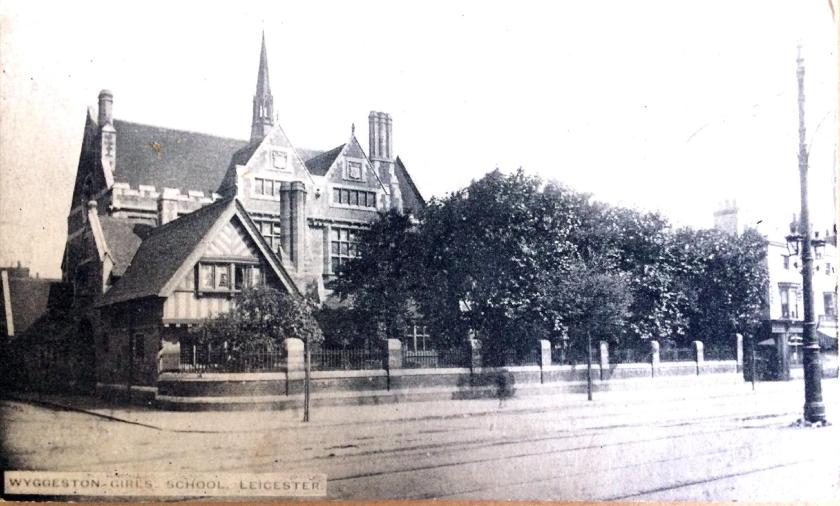
Lily Harriet Mary Peake was born at 18 Highcross Street on 5th June 1891 and baptised on 16th August at Osmaston-by-Ashbourne in Derbyshire. She attended Wyggeston Girls’ School until the age of 18. Headmistress Miss Heron described Lily as “capable of a very responsible post. She has tact, judgement and initiative and knows how to manage others without friction.” Lily was 5’6” tall, weighed 9 stone 12lbs and wore glasses. She had poor teeth, fair hair and brown eyes. After leaving school she spent two years managing a large doctor’s practice in Birmingham before moving to Devon in 1914, where she spent another two years working in Public Health for Devon County Council. Early in 1915 The Wyggeston Girls’ Gazette reported that “Lily Peake has a post as Clerk-Dispenser at a Hospital in Barnstaple.”
From July 1917 to July 1918 Lily worked as a dispenser at Falmouth Military Hospital. During this time Lily applied to become an officer with the WRNS. She underwent training – which was cut short by six days due to influenza – and a very thorough and harsh review. She was judged to be “more fit to run a Reformatory or Servants’ Registry….too self assertive, and not a lady,” and a “person of mediocre ability.” Nevertheless her application was conditionally approved. Lily began on probation as an Assistant Principal with the Womens Royal Naval Service on 23rd October 1918 at Chatham at a salary of £120 per year.
Due to her previous experience as a clerk and a dispenser, Lily was put in charge of three hostels and was described as having shown a great interest in the ratings in her charge. She was thought to be a “good sort” by officers with good organising capacity but poor business capacity. She could turn her hand to anything and was always willing. Despite having fainted at her first operation, one assessor described Lily: “Was awfully good, saved Cottrill’s life. Cottrill had haemorrhage from ulcer. Peake did everything in hours. Very good bustling about in overall…..Very good at office work, businesslike but lacking in authority.” Her services were also “invaluable during the influenza epidemic as she [was] a trained nurse.” She was soon judged to be worthy of promotion, to the position of Principal.
In April Lily’s role was made redundant due to the cessation of hostilities. She received a letter of notice at her residence in Watts Avenue, Rochester and served until 24th May 1919.
Before leaving the WRNS Lily found work as a Matron in a civilian hospital, beginning on 6th June 1919. However she does not appear to have stayed in this role for very long. Lily’s parents had moved to Chelea Cottage, St Helen’s on the Isle of Wight by 1920, accompanied by Lily who threw herself into village life, in particular taking a very active part in the Women’s Institute. On 11th August 1921 Lily married farmer Jonathan Christmas Hosford (1872-1961), who was twenty years her senior, at St Helen’s village church. As a result of Lily being so well liked in the village, the wedding was very well attended and the village was decorated with bunting. Lily’s father was “unable to get home” (though he did send a congratulatory telegram and a cheque) and so Lily was accompanied by her brother Charles and given away by her mother. She wore a cream crepe de chine dress with a lace underdress and a black hat with black ostrich feathers arranged around the brim. Lily and Jonathan had met during the war years when Lily served under her future husband in the WRNS.
Old Park, Horsham
Lily and Jonathan settled in Horsham, where in 1930, aged 39, Lily gave birth to their daughter Sara. Lily was very active in the Women’s Institute, judging jam and needlework and giving talks across Sussex. In 1939 they lived at Old Park, Kerves Lane, Horsham. Jonathan died in 1961 while they were living at 31 Hillside. Lily moved into a nursing home in Aylesbury, where she died on 14th November 1984.
Kenneth High Pegg was born 5th April 1891 at Danes Hill House, Hinckley Road, and baptised at St Martin’s on 11th May. His father was Abraham Pegg (1846-1892), an elastic web manufacture, and his mother Anne Elizabeth Hextall (1857-1924). They married in Islington in 1881. Together Abraham and Anne had four children – William Geoffrey (1884-1937), Annie Gertrude (1882-1969), Kathleen Mary (1886-1946) and Kenneth Hugh (1891-1916), all baptised at St Martin’s. They lived in comfort at Danes Hill House, which had eight bedrooms, stables, dovecote and large gardens.
Abraham was a sidesman at St Martin’s from at least 1882 until he died on 11th May 1892, leaving a fortune of £35,000 to his wife and four children in a will made a fortnight earlier. He was buried at Welford Road Cemetery. Kenneth would not have remembered his father as he was only a year old when Abraham died. Two years later in 1894 Anne Elizabeth remarried very quietly, to the Reverend Samuel John Woodhouse Sanders (1846-1915), who had been an honorary canon of Peterborough since 1890 and vicar of St Martin’s since 1893. Danes Hill House was sold soon after the wedding breakfast and the proceeds held on trust for the children. Therefore for most of his childhood, Samuel
St Martin’s East
Sanders was Kenneth’s stepfather and St Martin’s vicarage (at number 1 St Martin’s East) was his home. Samuel Sanders had five children from his first marriage to Roberta Henrietta Douet (1852-1891), who died after giving birth to their son Henry Launcelot Sanders (1891-1911). All of these children became Kenneth’s step siblings and some he shared a home with.
Canon Sanders left St Martin’s in 1909 and became Vicar of Rothley, so Rothley Vicarage – a typical large vicarage of more than seventeen rooms – became Kenneth’s new home.
Kenneth, who had brown hair and blue eyes, first attended Stoneygate School and was then sent to board at Malvern College, where he was a member of the Officers Training Corps for five years. After school, he returned to Rothley vicarage as a land agent’s pupil. The atmosphere at home may have been difficult at times as Canon Sanders was not altogether happy at Rothley – nor were his parishioners always happy. Some time between 1911 and 1914 – by now 5’11” tall and with a scar on his right knee – Kenneth moved to Canada, where he worked as an estate agent.
Kenneth enlisted at Valcartier as a private soldier in the Canadian Army Service Corps on 23rd September 1914. He was commissioned Second Lieutenant on probation in the 3rd Battalion Leicestershire Regiment on 30th December 1914 and confirmed in rank on 7th June 1915, when he had been in France for a couple of months, having landed on 22nd March 1915 (attached to the 2nd Battalion). Shortly before departing England Kenneth made a will leaving everything to his two sisters and his brother, with the interest on his capital going to his mother during her lifetime. His stepfather of twenty one years died six months later. Some time later his regiment moved to Mesopotamia, where Kenneth died on 21st February 1916 at or near Orah, shot by a rifle. The War Diary records:-
Battalion HQ made in Tigris Street close to Dorset Trench. Quiet day. At night General Gorringes column marched in the direction of Marsh Bend of river west of Hannah Position, whilst the 21st Brigade under General Norrie which was in Reserve marched north east. At 7.00pm rocket was sent up from the right of our trenches which immediately caused the Turks to open very heavy rifle fire and machine gun fire, also shrapnel and high explosive shells, lasting about one hour. Our casualties, 1 man killed, 1 man wounded. Later on, about 1pm. Lt K H Pegg was killed by a rifle bullet. Battalion occupied trench dug the night before, which was now called Leicester Trench, 500 yards distant from the Turks.
The Leicester Mercury reported on 25th February 1916:
LIEUT K H PEGG KILLED
Official intimation has been received that Lieut K H Pegg 2nd Leicestershire Regiment, has been killed in action in Mesopotamia, about January 20th. Lieut Pegg, who was 26 years of age, was the youngest son of the late Mr Abraham Pegg, and was educated at Stoneygate School and at Malvern. At the time of the outbreak of war he had been in Canada for about two months, and within a few weeks of the opening of hostilities had enlisted, and eventually came to England with the first Canadian Contingent. At Christmas 1914 he was given a commission, and transferred to the 3rd Leicestershire Regiment, and in the following March he went to France, attached to the 2nd Battalion, and saw a good deal of active service before his removal to Mesopotamia.
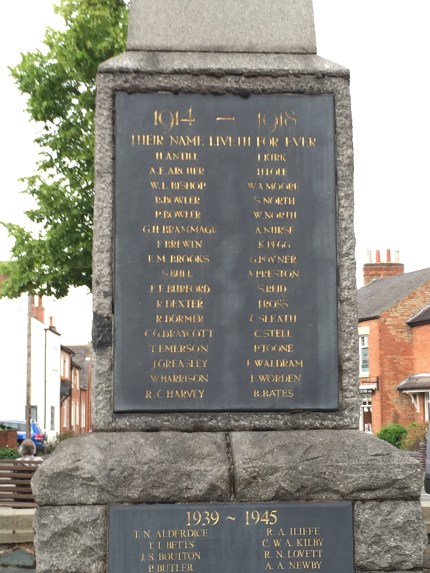
Kenneth was commemorated at Rothley along with the other men of the parish who had lost their lives, both inside the church on a memorial to “the heroic dead” and also on the war memorial in the village square.
Memorial inside Rothley ChurchRothley village war memorial
He was also added to the marble memorial to his father at Welford Road Cemetery, which reads:
Memorial at Welford Road Cemetery
Also to the dear memory of/Kenneth Hugh Pegg/Lieutenant in the Leicestershire Regiment/Younger son of the above/Who was killed near Orah, Mesopotamia/on February 23rd 1916/Aged 24 years
After Kenneth’s death his sister Kathleen unsuccessfully applied for his medals on 11th December 1928; His brother William was successful on 4th March 1929. Kenneth’s mother Anne Elizabeth died at a nursing home in Middlesex in 1924.
 John Frederick Johnson was the only child of James Johnson (1849-1927) and Annie Elizabeth Flude (1856-1947) who married at St Matthew’s church in 1887. He was born on 28th September 1889 and baptised at St Matthew’s shortly after on 6th November. After their marriage James and Annie moved into 5 Upper King Street, where John was born and where they would remain for the next forty years. James worked for himself as an accountant in shared premises at 24 Millstone Lane.


 Alan Glendenning Mason was born in 1896 and baptised at St Martin’s on 23rd July 1896. He attended Wyggeston Boys School, where he excelled at athletics. At his school sports day in June 1912 he won silver cups for coming first in the 120 yards hurdle race and the high jump and a silver tankard for coming second in the 100 yards sprint. This crowned him joint school sports champion. In June 1914 Alan captained the school cricket team against Derby School, who won by a single run. He passed his Oxford Local Examination with the highest honours and was awarded at Magdalen College, Oxford, intending to follow his father into medicine.
 Amos Mills (1869-1955) and Annie Elizabeth Daniels (1862-1950) married in Hull, where Annie was born, in 1894. They had two children, George Emery (1895-1915) who was born in the parish of St George, Hull in 1895 and Marjorie (1899-), who was born in Leicester and baptised at St Martin’s on 18th March 1899. In 1898-1899 they all lived at 7 Hazel Street, Amos working as a travelling sales representative. In 1901 the family – including Annie’s widowed mother – lived at 95 Narborough Road. In 1904 they lived at 111 Fosse Road South and Amos was a district manager for James Hole and Co, brewers. In 1905 they all moved to 10 Daneshill Road where Annie and Amos would live for the rest of their lives. There was a strong link with St Martin’s – Amos served as a songman in the choir between 1899 and 1928, and as sidesman for a further four years.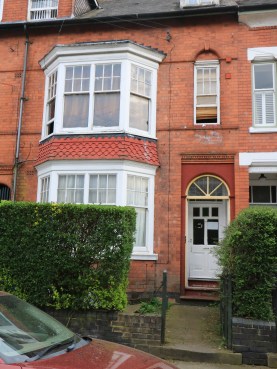


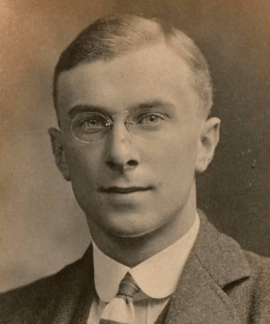


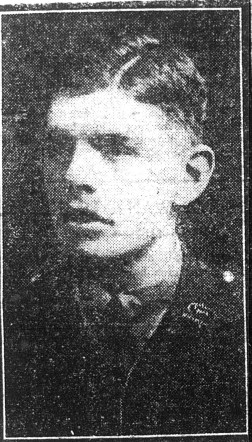 Charles Brinsley Pemberton Peake was born on 2nd January 1897 and baptised privately at St Martin’s on 14th April 1897. He was educated at Wyggeston School and was about to go up to Oxford when war was declared. Instead, Charles Joined the Leicestershire Regiment in October 1914 as 2nd Lieutenant, two months before his 17th birthday.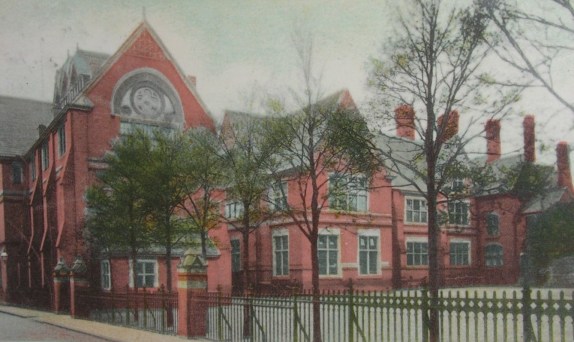
 Lily Harriet Mary Peake was born at 18 Highcross Street on 5th June 1891 and baptised on 16th August at Osmaston-by-Ashbourne in Derbyshire. She attended Wyggeston Girls’ School until the age of 18. Headmistress Miss Heron described Lily as “capable of a very responsible post. She has tact, judgement and initiative and knows how to manage others without friction.” Lily was 5’6” tall, weighed 9 stone 12lbs and wore glasses. She had poor teeth, fair hair and brown eyes. After leaving school she spent two years managing a large doctor’s practice in Birmingham before moving to Devon in 1914, where she spent another two years working in Public Health for Devon County Council. Early in 1915 The Wyggeston Girls’ Gazette reported that “Lily Peake has a post as Clerk-Dispenser at a Hospital in Barnstaple.”


 The War and St Martin's